
 Olive fruit rot is the damage caused by the fungus Camarosporium dalmaticum (Thüm. 1979) or Sphaeropsis dalmatica in olives.
It is spread throughout several Mediterranean countries. Its incidence is usually reduced and unimportant except for certain greening farms.
Damage caused by the olive grove
The olive fruit rot exclusively affects the fruit without affecting the vegetative state of the olive tree.
The damages are mainly visual and depreciate the value of the olive for green.
Symptoms of Sphaeropsis dalmatica infection
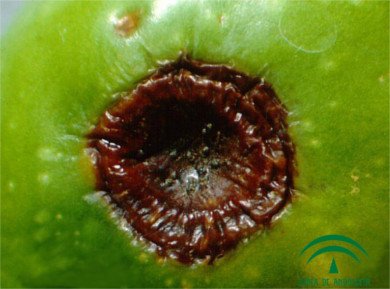 The olives affected by Sphaeropsis dalmatica fungus have round-shaped necrotic spots up to 1 cm in diameter and form a small crater in the olive “escudete or shield“.
The fungus can spread and mummify the olive in a similar way to Colletotrichum spp. (Anthracnose in olives).
Cycle and dispersion of dalmatic Sphaeropsis
Although the fungus can develop in dry weather, it requires rain to produce the spores, these are dispersed by the wind, the rain and the insects.
The presence of wounds favors the infection of the fungus.
The appearance of the olive fruit rot has been related to the olive fly (Prolesioptera berlesiana) parasite, putting this diptera on the bite of the fly usually infects the fruits.
The fungus does not usually deepen more than 1-2 mm below the surface of the olive.
Treatment or control of the olive grove
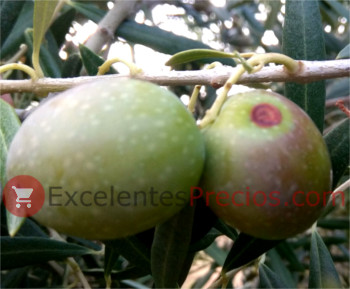 The most effective form of control of the disease is the fight against olive fly populations (Bactrocera oleae). The trapping techniques can help us in this fight. The collection and disposal of the affected olives (source of fungus spores).
In case of need to perform phytosanitary treatments (endemic areas with production dedicated to greening ). Cupric fungicides similar to those authorized for the treatment of Colletotrichum sp in olives or the repilo are usually used.
Recommended Reading
You have more information about the different pests or diseases of the olive tree:
Stages and treatment of black scale .
Olive moth damage and control of Prays .
Consequences of root asphyxiation .
Verticilosis of the olive tree.
Cycle of the olive tree borer .
Warning
We have translated the information on our website from Spanish to English. Note that some words may have seen their meaning altered during their translation.